- L’actualité B2B
- Tout
- Acquisition
- Actualités corporate
- Anniversaires
- Awards / récompenses
- Bureau / Office
- CHR/HORECA
- Communication / Marketing des entreprises
- Distribution
- e-commerce
- Événements
- Industrie
- L'actu des salons professionnels
- L'actu Hôtellerie
- L'actualité des filières
- L'actualité RSE des entreprises
- Les grandes interviews
- Nominations
- Packaging
- Resultats financiers
- Retail - Actualité boutiques
- Retail - Actualité des grandes enseignes
- RSE / Économie circulaire
- Made in France
- HFN – Le Magazine
- International content






- L’actualité B2B
- Tout
- Acquisition
- Actualités corporate
- Anniversaires
- Awards / récompenses
- Bureau / Office
- CHR/HORECA
- Communication / Marketing des entreprises
- Distribution
- e-commerce
- Événements
- Industrie
- L'actu des salons professionnels
- L'actu Hôtellerie
- L'actualité des filières
- L'actualité RSE des entreprises
- Les grandes interviews
- Nominations
- Packaging
- Resultats financiers
- Retail - Actualité boutiques
- Retail - Actualité des grandes enseignes
- RSE / Économie circulaire
- Made in France
- HFN – Le Magazine
- International content
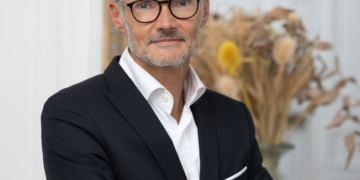
Christian Valat – Trust in the future as a raw
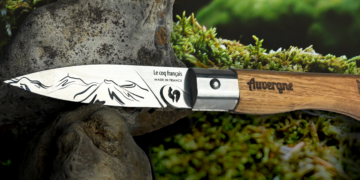
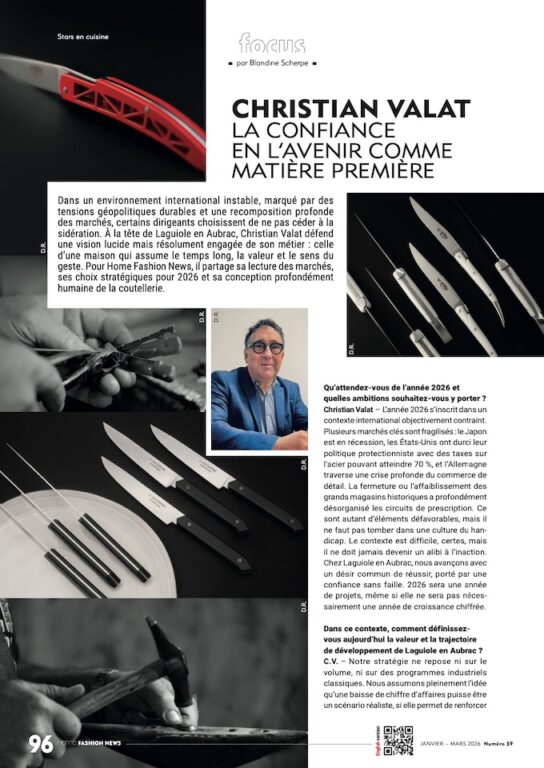
In an unstable international environment marked by lasting geopolitical tensions and a profound reshaping of markets, some leaders choose not to give in to paralysis. At the helm of Laguiole en Aubrac, Christian Valatchampions a clear-eyed yet resolutely committed vision of his craft: that of a Maison which embraces the long term, the value and the meaning of the gesture. For Home Fashion News, he shares his reading of the markets, his strategic choices for 2026 and his deeply human approach to cutlery.
What are your expectations for 2026, and what ambitions do you wish to pursue?
Christian Valat — The year 2026 unfolds in an objectively constrained international context. Several key markets are under pressure: Japan is in recession, the United States has tightened its protectionist stance with steel tariffs reaching up to 70%, and Germany is experiencing a deep crisis in the retail sector. The closure or weakening of historic department stores has profoundly disrupted traditional channels of influence. These are clearly unfavourable factors, but we must not fall into a culture of resignation. The context is difficult, certainly, but it should never become an excuse for inaction. At Laguiole en Aubrac, we move forward with a shared desire to succeed, driven by unwavering confidence. 2026 will be a year of projects, even if it is not necessarily a year of measurable growth.
In this context, how do you define today the value and development trajectory of Laguiole en Aubrac?
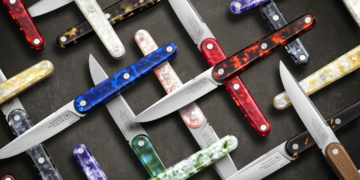
C.V. — Our strategy is based neither on volume nor on conventional industrial programmes. We fully accept that a decline in turnover may be a realistic scenario if it allows us to strengthen the value of what we produce. We favour more accomplished pieces, finishes at the crossroads of fine craftsmanship and goldsmithing, and unique or near-unique creations.
This choice responds to a profound shift in expectations, particularly among younger generations of creators and artisans, who seek recognition of the gesture, creative freedom and the possibility of signing their work. Our role is to offer them that space for expression within the company itself, so that they can give their very best without sacrificing the collective dimension. I remain convinced that no one is unhappy doing beautiful work. Success is built over time, sometimes across several years, whereas failure can be immediate.
How do you analyse the French cutlery market today?
C.V. — The French market is paradoxical and particularly complex. There is still a network of small independent cutlery shops, sometimes highly committed, but department stores no longer play their role as prescribers. Visibility for high-value products is extremely limited. Beyond a retail price of €50, a knife becomes difficult to sell.
Past controversies, confusion around designations and the proliferation of imitation products have durably installed a climate of mistrust. In my view, communication focused on denouncing counterfeits has been counterproductive: it has fuelled doubt rather than fostering understanding. The only viable path is to tell what we do, explain the gesture, the origin and the know-how—without ever introducing suspicion.
Does the international market appear to be a more promising relay?
C.V. — Yes, clearly. Asian competition, particularly from China, is becoming increasingly qualitative. A purely industrial battle is lost in advance. Differentiation can only come through meaning, authenticity and intangible value. A Laguiole knife is not a simple functional object. It carries a territory, a cradle, a human and geographical history. Without this narrative, it becomes incomprehensible and, mechanically, overpriced. Internationally, this storytelling is better understood and better valued. We remain confident about a gradual recovery, particularly in the United States, once economic cycles rebalance. Protectionism is an illusion: inflation, rising interest rates and declining consumption are signals of correction, not sustainable solutions.
How can the offer evolve without betraying the identity of the Maison?
C.V. — A Maison cannot survive by remaining frozen around its original product. The example of Hermès is telling: had the brand remained confined to saddlery, it would probably no longer exist today. We must broaden our range, learn new crafts, accept a gradual transformation of the offer, while remaining faithful to our DNA. The challenge is not opportunism, but coherence over the long term.
What do you wish to express in Frankfurt this year?
C.V. — At Ambiente, the challenge is not to multiply spectacular new launches. Our priority is to make people understand what we sell: a universe, a landscape, a story. The knife must be placed back at the centre of a broader narrative, within a staging capable of capturing buyers’ attention. We are not selling a product; we are selling a story, an emotion, an imaginary rooted in the Aubrac and carried by committed women and men.
What is today your greatest challenge and your greatest source of pride?
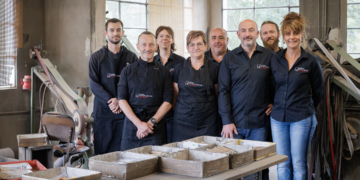
C.V. — The challenge was to create a united, engaged group, driven by the desire to succeed together. My greatest pride is having enabled artisans—true magicians—to express themselves fully. They transform rare or symbolic materials, such as a mammoth molar, historical elements or singular woods, into unique, hand-sculpted, signed pieces. Giving them this freedom of expression is, in my eyes, the most meaningful achievement of all.
Source: Home Fashion News January26