- A la une !
- L’actualité B2B
- Tout
- Acquisition
- Actualités corporate
- Anniversaires
- Awards / récompenses
- Bureau / Office
- CHR/HORECA
- Communication / Marketing des entreprises
- Distribution
- e-commerce
- Événements
- Industrie
- L'actu des salons professionnels
- L'actu Hôtellerie
- L'actualité des filières
- L'actualité RSE des entreprises
- Les grandes interviews
- Nominations
- Packaging
- Resultats financiers
- Retail - Actualité boutiques
- Retail - Actualité des grandes enseignes
- RSE / Économie circulaire
- Made in France
- HFN – Le Magazine
- International content



- A la une !
- L’actualité B2B
- Tout
- Acquisition
- Actualités corporate
- Anniversaires
- Awards / récompenses
- Bureau / Office
- CHR/HORECA
- Communication / Marketing des entreprises
- Distribution
- e-commerce
- Événements
- Industrie
- L'actu des salons professionnels
- L'actu Hôtellerie
- L'actualité des filières
- L'actualité RSE des entreprises
- Les grandes interviews
- Nominations
- Packaging
- Resultats financiers
- Retail - Actualité boutiques
- Retail - Actualité des grandes enseignes
- RSE / Économie circulaire
- Made in France
- HFN – Le Magazine
- International content
Robert Herder cutlery manufacture: between heritage and creation, a house in motion
At the heart of Solingen, the historic capital of German cutlery, the Robert Herder house has, for more than a century, combined artisanal craftsmanship with applied research. Under the impetus of Gisleheid Herder-Scholz, visionary heir and managing director, the family business positions its two emblematic brands—Windmühlenmesser and Eichenlaub—within a dynamic of continuous innovation, driven by material, the hand and a contemporary outlook.
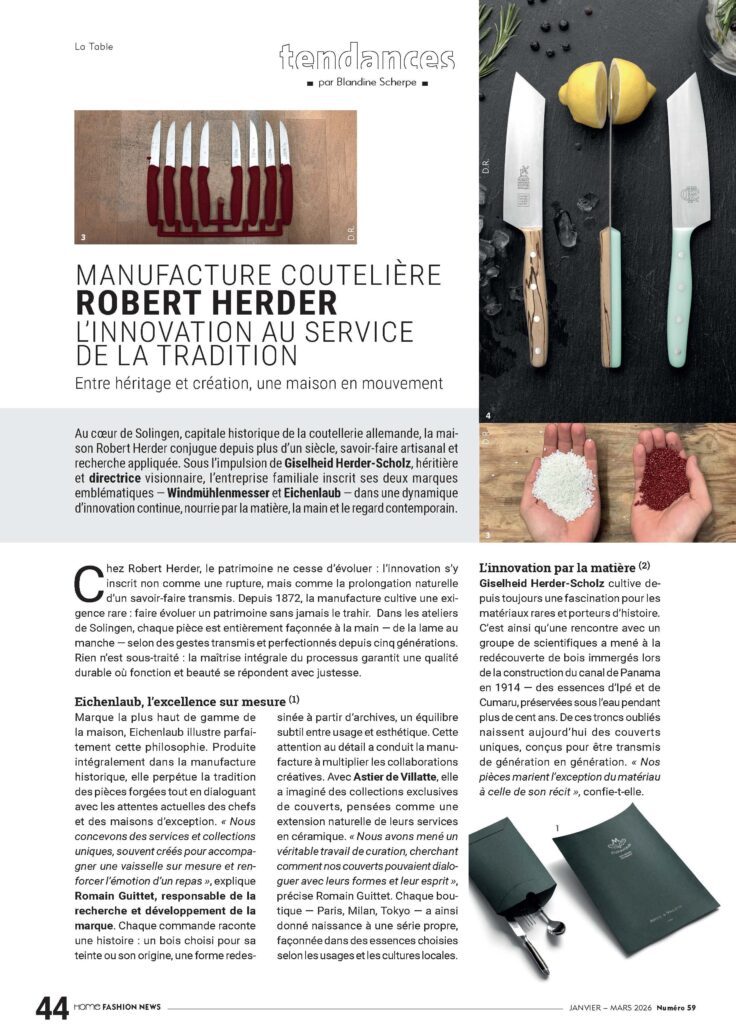
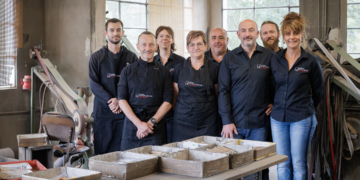
At Robert Herder, heritage is in constant evolution: innovation is not seen as a rupture, but as the natural continuation of transmitted know-how. Since 1872, the manufacture has cultivated a rare standard: developing a legacy without ever betraying it. In the Solingen workshops, each piece is entirely handcrafted—from blade to handle—according to gestures passed down and refined over five generations. Nothing is outsourced: full control of the process guarantees lasting quality, where function and beauty respond to one another with precision.
Eichenlaub, bespoke excellence
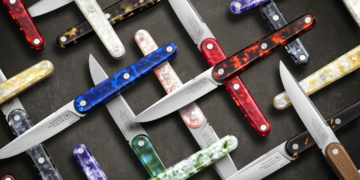
As the house’s most high-end brand, Eichenlaub perfectly embodies this philosophy. Entirely produced in the historic manufacture, it perpetuates the tradition of forged pieces while engaging with the contemporary expectations of chefs and exceptional establishments. “We design unique services and collections, often created to accompany bespoke tableware and heighten the emotion of a meal,” explains Romain Guittet, Head of Research and Development for the brand. Each order tells a story: a wood selected for its tone or origin, a form redrawn from archives, a subtle balance between use and aesthetics.
This attention to detail has led the manufacture to multiply creative collaborations. With Astier de Villatte, it imagined exclusive cutlery collections conceived as a natural extension of their ceramic services. “We undertook a true curatorial process, exploring how our cutlery could dialogue with their forms and spirit,” adds Romain Guittet. Each boutique—Paris, Milan, Tokyo—thus gave rise to its own series, crafted from woods chosen according to local uses and cultures.
Innovation through material
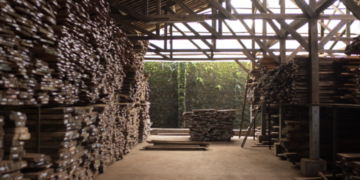
Gisleheid Herder-Scholz has always nurtured a fascination for rare materials rich in history. A meeting with a group of scientists led to the rediscovery of woods submerged during the construction of the Panama Canal in 1914—ipé and cumaru species preserved underwater for more than a century.
From these forgotten trunks now emerge unique cutlery pieces, designed to be passed down from generation to generation. “Our pieces unite the exceptional nature of the material with that of its story,” she confides.
Towards a sustainable future
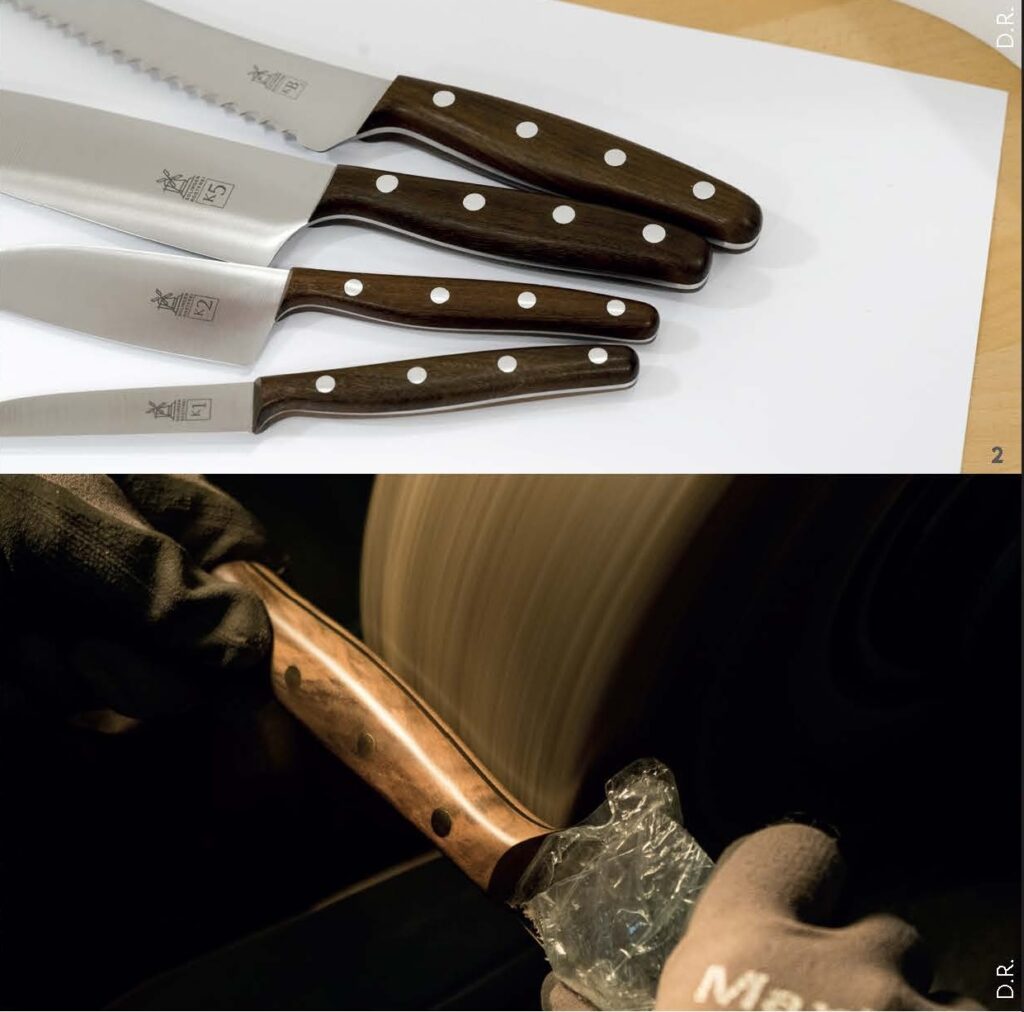
The same curiosity drives applied research projects. In collaboration with a German company specialising in biopolymers derived from recycled beetroot peels, the manufacture has set itself an ambitious goal: to replace all polypropylene handles with bio-based alternatives by 2027.
This comprehensive ecological transition also extends to all packaging, now free from any material originating from the petroleum industry.
Between tradition and avant-garde
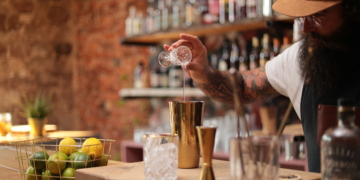
The house continues this exploration through international projects: the Bar Knife, an elegant bartender’s knife designed with Rare Fruits Council, a multidisciplinary Dutch agency blending design and concept development; a metal and marquetry piece created with Marunao, the Japanese reference for “Hachi” chopsticks since 1939; as well as collaborations currently under discussion with Amarees and Gohar World, the New York brand founded by Laila and Nadia Gohar.
A laboratory for the future
Through these initiatives, Robert Herder demonstrates that a historic savoir-faire can become a powerful laboratory for innovation. With 150 years of history, the manufacture moves forward with the same conviction: functionality and beauty do not oppose each other, they complement one another over time.
Source: Home Fashion News 60 – January 2026