- L’actualité B2B
- Tout
- Acquisition
- Actualités corporate
- Anniversaires
- Awards / récompenses
- Bureau / Office
- CHR/HORECA
- Communication / Marketing des entreprises
- Distribution
- e-commerce
- Etudes de marché
- Événements
- Industrie
- L'actu des salons professionnels
- L'actu Hôtellerie
- L'actualité des filières
- L'actualité RSE des entreprises
- Les grandes interviews
- Nominations
- Packaging
- Resultats financiers
- Retail - Actualité boutiques
- Retail - Actualité des grandes enseignes
- RSE / Économie circulaire
- Made in France
- HFN – Le Magazine
- International content






- L’actualité B2B
- Tout
- Acquisition
- Actualités corporate
- Anniversaires
- Awards / récompenses
- Bureau / Office
- CHR/HORECA
- Communication / Marketing des entreprises
- Distribution
- e-commerce
- Etudes de marché
- Événements
- Industrie
- L'actu des salons professionnels
- L'actu Hôtellerie
- L'actualité des filières
- L'actualité RSE des entreprises
- Les grandes interviews
- Nominations
- Packaging
- Resultats financiers
- Retail - Actualité boutiques
- Retail - Actualité des grandes enseignes
- RSE / Économie circulaire
- Made in France
- HFN – Le Magazine
- International content
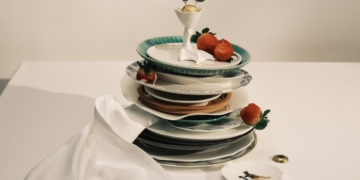
What If Premium Brands Were One of Retail’s Greatest Opportunities?
Creators of value, differentiation and brand image, premium brands have long occupied a central place in specialist retail. Today, however, they are becoming less visible in many stores. Is that really the right direction?
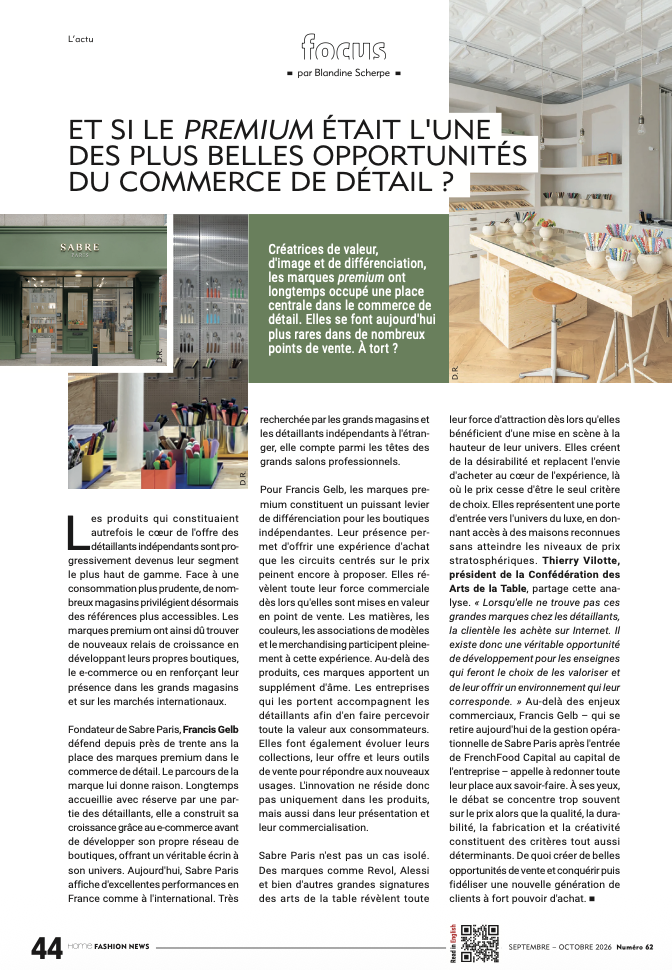
Many products that once represented the core of the market have gradually become part of the premium segment. Faced with more cautious consumer spending, many retailers now favour more accessible products. At the same time, premium brands have strengthened their own retail networks, expanded e-commerce and increased their presence in department stores and international markets.
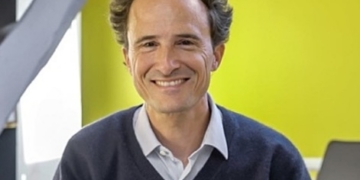
For nearly thirty years, Francis Gelb, founder of Sabre Paris, has defended the importance of premium brands in specialist retail. The company’s history reflects that conviction. After initially being met with caution by part of the retail market, Sabre Paris first built its growth through e-commerce before developing its own network of boutiques designed to showcase the brand’s universe. Today, the company enjoys strong performances both in France and internationally. Highly sought after by leading department stores and specialist retailers around the world, it is also among the headline brands at major international trade fairs.
According to Francis Gelb, premium brands remain one of the strongest tools available to independent retailers to differentiate themselves. Their presence creates a shopping experience that price-driven retail concepts struggle to replicate. When properly presented in-store, they reveal their full commercial potential. Materials, colours, product combinations and merchandising all contribute to creating an immersive environment. Beyond the products themselves, these brands bring emotion and help retailers communicate their value more effectively to consumers. They continually refresh their collections, develop new tools and adapt their sales support to meet changing market expectations. Innovation therefore lies not only in the products themselves but also in the way they are presented and marketed.
Sabre Paris is far from an isolated example. Brands such as Revol, Alessi and many other leading names in tableware demonstrate how powerful premium brands become when displayed in environments that reflect their identity. They create desirability and place the pleasure of buying back at the centre of the retail experience, where price is no longer the sole purchasing criterion. They also provide consumers with access to recognised luxury brands without reaching the highest luxury price levels.
Thierry Vilotte, President of the Confédération des Arts de la Table, shares this view:
“When retailers do not carry these major brands, customers buy them online. There is therefore a real opportunity for retailers willing to showcase them and create an environment worthy of their identity.”
Beyond the commercial dimension, Francis Gelb, who is now stepping back from the operational management of Sabre Paris following FrenchFood Capital’s investment in the company, believes it is essential to restore recognition to craftsmanship and manufacturing expertise. In his view, discussions too often focus exclusively on price, while quality, durability, manufacturing and creativity are equally decisive purchasing criteria. For retailers, these brands therefore represent a genuine opportunity to attract, win over and build loyalty among a new generation of consumers with strong purchasing power.
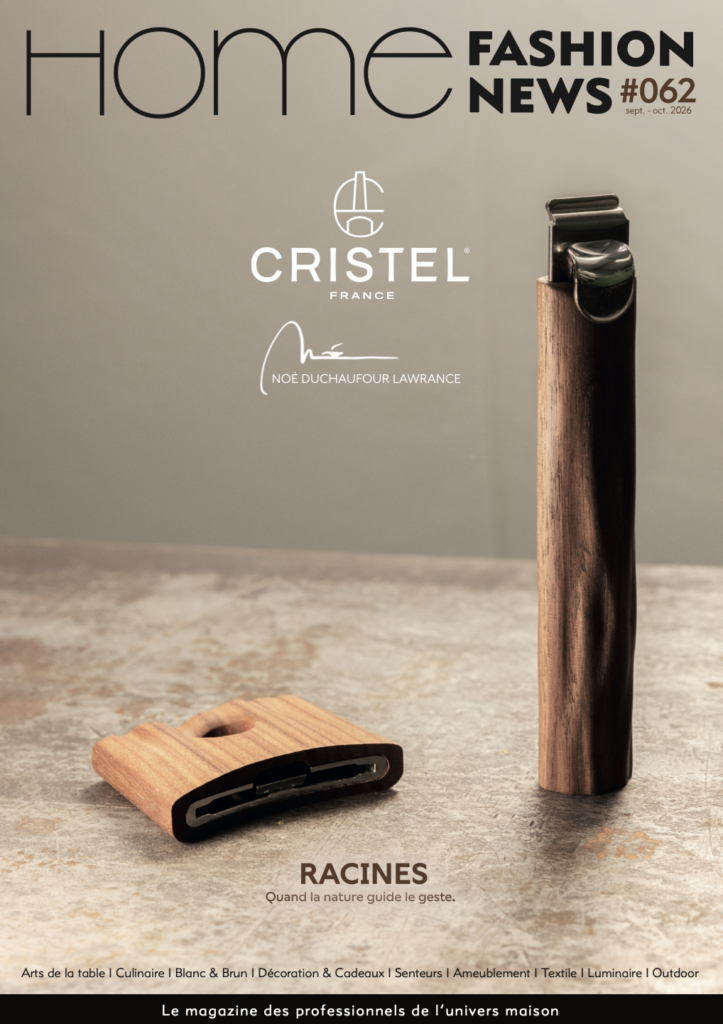
Home Fashion News #62 – sept 2026