- L’actualité B2B
- Tout
- Acquisition
- Actualités corporate
- Anniversaires
- Awards / récompenses
- Bureau / Office
- CHR/HORECA
- Communication / Marketing des entreprises
- Distribution
- e-commerce
- Etudes de marché
- Événements
- Industrie
- L'actu des salons professionnels
- L'actu Hôtellerie
- L'actualité des filières
- L'actualité RSE des entreprises
- Les grandes interviews
- Nominations
- Packaging
- Resultats financiers
- Retail - Actualité boutiques
- Retail - Actualité des grandes enseignes
- RSE / Économie circulaire
- Made in France
- HFN – Le Magazine
- International content
- L’actualité B2B
- Tout
- Acquisition
- Actualités corporate
- Anniversaires
- Awards / récompenses
- Bureau / Office
- CHR/HORECA
- Communication / Marketing des entreprises
- Distribution
- e-commerce
- Etudes de marché
- Événements
- Industrie
- L'actu des salons professionnels
- L'actu Hôtellerie
- L'actualité des filières
- L'actualité RSE des entreprises
- Les grandes interviews
- Nominations
- Packaging
- Resultats financiers
- Retail - Actualité boutiques
- Retail - Actualité des grandes enseignes
- RSE / Économie circulaire
- Made in France
- HFN – Le Magazine
- International content
HAVILAND : REVIVING ITS HERITAGE
Part of Bernardaud since 2024, Maison Haviland is experiencing new momentum. Its first showcase on the Left Bank marks this revival, presenting reissues and new creations “made in Limoges”. Among them are the historic “Fleurs d’Auteuil” service and the collaboration with the Ritz Paris, which is celebrating its 115th anniversary. New pieces will be unveiled during Paris Design Week.
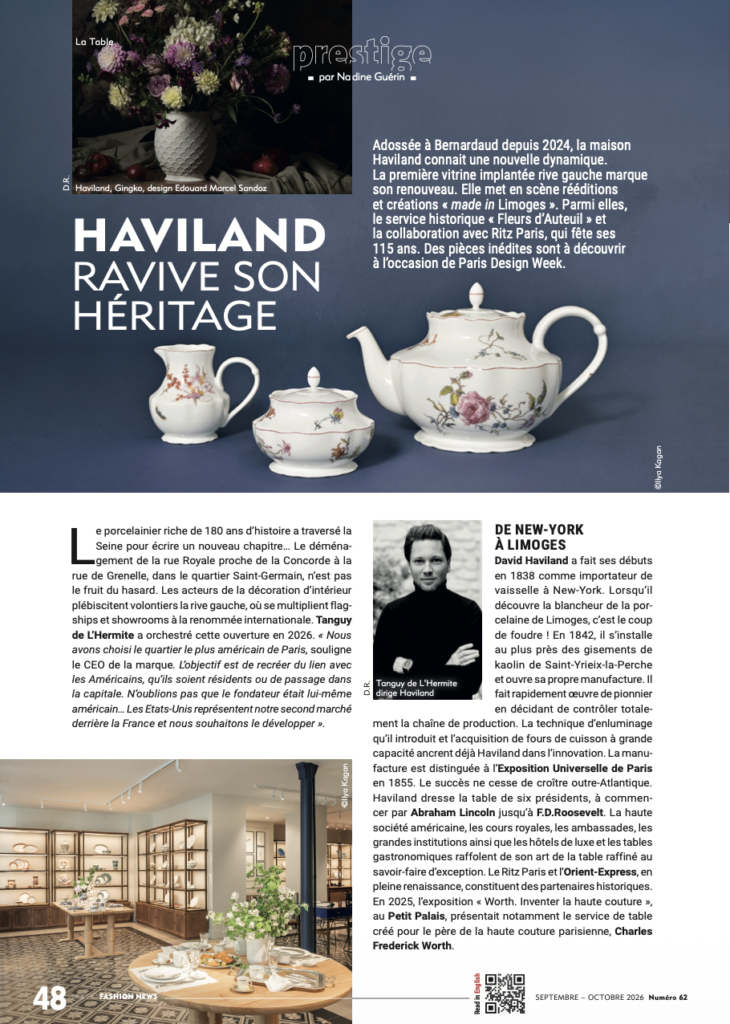
With 180 years of history behind it, the porcelain manufacturer has crossed the Seine to write a new chapter… The move from Rue Royale, near Place de la Concorde, to Rue de Grenelle in the Saint-Germain district is no coincidence. Interior design professionals have a strong preference for the Left Bank, where internationally renowned flagships and showrooms are increasingly establishing themselves. Tanguy de L’Hermiteorchestrated the opening in 2026. “We chose the most American district of Paris,” explains the brand’s CEO. “The aim is to reconnect with Americans, whether they live in Paris or are visiting the capital. Let us not forget that the founder himself was American… The United States is our second-largest market after France, and we want to develop it further.”
FROM NEW YORK TO LIMOGES
David Haviland began his career in 1838 as an importer of tableware in New York. When he discovered the whiteness of Limoges porcelain, it was love at first sight! In 1842, he settled close to the kaolin deposits of Saint-Yrieix-la-Perche and opened his own manufactory. He quickly became a pioneer by deciding to take complete control of the production chain. The decorating technique he introduced and the acquisition of high-capacity kilns already placed Haviland at the forefront of innovation. The manufactory received an award at the Paris Universal Exhibition in 1855.
Success continued to grow across the Atlantic. Haviland set the table for six presidents, from Abraham Lincoln to F. D. Roosevelt. American high society, royal courts, embassies, major institutions, as well as luxury hotels and fine-dining restaurants, embraced its refined tableware and exceptional craftsmanship. The Ritz Paris and the Orient-Express, currently undergoing a major revival, are longstanding partners. In 2025, the exhibition “Worth. Inventing Haute Couture” at the Petit Palais notably featured the table service created for Charles Frederick Worth, the father of Parisian haute couture.
A PIONEERING WORKSHOP-LABORATORY
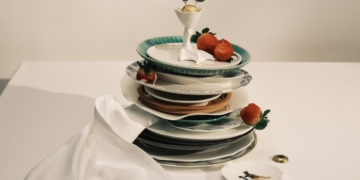
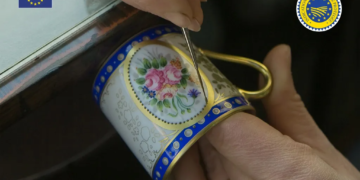
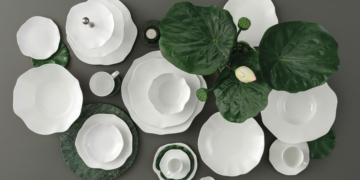
The creation of the Atelier d’Auteuil in 1872 marked an important stage in the development of the Limoges manufactory. Paris, with its major schools of thought and avant-garde artistic movements, attracted Charles Haviland, the founder’s eldest son. He set out to move the business from craft production towards industrial production. At the same time, he sensed that Haviland needed to play an active role on the Parisian art scene. “A bold choice,” comments Tanguy de L’Hermite, representing the sixth generation of the Bernardaud family. Engraver Félix Bracquemond, who was close to the Impressionist painters, took over the artistic direction of the workshop. It is precisely the memory of this place that Haviland is reviving today in its new directly operated boutique, the only one of its kind in the world. With its cement tiles, natural light and selection of vintage furniture, the Left Bank flagship evokes the artists’ studios that were numerous in the surrounding streets at the end of the 19th century. “Fleurs d’Auteuil” was also the first pattern created on the outskirts of Paris. Its reissue is one of the highlights of the 2026–27 new collections. “It brings fresh enchantment to everyday life by celebrating the richness of French artistic heritage,” explains the CEO. The bright, delicate pattern comprises around a dozen flowers, including iris, double rose, tulip, carnation and bellflower. It draws inspiration from both the ornamental repertoire and the botanical art of the 18th and 19th centuries. But it also made history through its innovations: its asymmetrically arranged “scattered” motifs and the introduction of chromolithography on coloured paper. “The ‘Fleurs d’Auteuil’ service liberated the porcelain aesthetic of the time,” says Tanguy de L’Hermite. “The line was a great success.” To extend its modern appeal, Haviland is enriching it with new scalloped shapes through the “Séraphine” tea service and a variety of serving dishes.
THE VITALITY OF DECORATION
Haviland is making its ambition clear: to place the table within a broader art of living. “Decorative accessories are functional, contemporary pieces, some of them multipurpose, and ideal as gifts,” continues Tanguy de L’Hermite. This is the case with the trinket tray, bonbonnière and sugar bowl, which can easily be repurposed. They complement, for example, the services of the Ancienne Manufacture Royale, which Haviland has been reissuing identically since it was acquired by Bernardaud in 1986. Founded in 1737, its first pieces stamped “Limoges” date back to 1771. “We have a rich heritage to showcase,” explains the CEO. “Haviland has some 3,000 shapes in Limoges. It is the only manufacturer to integrate the three specific porcelain-making skills: creating the white porcelain, printing and decorating. Every pattern is produced by hand in Limoges.”
A true field for creative expression, Haviland’s design is distinguished by its timeless elegance, technical virtuosity and originality. The Haviland manufactory is an integral part of the history of French decorative arts. It has thus worked with the Ritz Paris since the first service created by César Ritz. Named “Marthe”, it features a delicate Louis XIV-inspired floral pattern, with a frieze of acanthus leaves and stylised hyacinths. The collection, now more than a century old, continues to expand, as demonstrated by the new pieces to be unveiled this autumn. The brand-new flagship brings together the quintessence of the Haviland style, shaped by major movements including Classicism, Orientalism, Modernism and Abstraction… “The new, streamlined shapes refresh the historic lines,” observes Tanguy de L’Hermite. “Take the ‘Gingko’ vase, for example, which comes from a 1910 archive. Edouard Marcel Sandoz sculpted it, but the vase was never produced. We used the mould to create it in biscuit porcelain with a glazed interior.” White porcelain also distinguishes “Infini”, a fluid, finely engraved line. The brand is expanding the collection with a cake platter, serving dish and other saucers. In addition, from summer 2026, Haviland set sail aboard the Olympian Orient-Express, considered the world’s largest sailing yacht. The porcelain manufacturer is continuing its longstanding partnership with Orient-Express, relaunched by Accor. Architect Maxime d’Angeac, who is overseeing this major revival, is a passionate advocate of high-end French craftsmanship. Haviland has created exclusive pieces for Yannick Alléno’s table as well as collections for the yacht’s dining venues. Suzanne Lalique-Haviland began collaborating with the manufactory at an early stage. She designed plates and the famous “Rail” pattern, which will be incorporated into the décor of the dining car and suites of the future train, scheduled for 2027. An exceptional showcase for Haviland, whose “bespoke projects account for half of its revenue”. Specification projects are a growth driver for this emblematic Limoges company.
Source: Home Fashion News #62 – Sept 2026 / Translation: Leila Ahmad / photos : copyright Ilya KAGAN @ilyafoodstories