- L’actualité B2B
- Tout
- Acquisition
- Actualités corporate
- Anniversaires
- Awards / récompenses
- Bureau / Office
- CHR/HORECA
- Communication / Marketing des entreprises
- Distribution
- e-commerce
- Etudes de marché
- Événements
- Industrie
- L'actu des salons professionnels
- L'actu Hôtellerie
- L'actualité des filières
- L'actualité RSE des entreprises
- Les grandes interviews
- Nominations
- Packaging
- Resultats financiers
- Retail - Actualité boutiques
- Retail - Actualité des grandes enseignes
- RSE / Économie circulaire
- Made in France
- HFN – Le Magazine
- International content














- L’actualité B2B
- Tout
- Acquisition
- Actualités corporate
- Anniversaires
- Awards / récompenses
- Bureau / Office
- CHR/HORECA
- Communication / Marketing des entreprises
- Distribution
- e-commerce
- Etudes de marché
- Événements
- Industrie
- L'actu des salons professionnels
- L'actu Hôtellerie
- L'actualité des filières
- L'actualité RSE des entreprises
- Les grandes interviews
- Nominations
- Packaging
- Resultats financiers
- Retail - Actualité boutiques
- Retail - Actualité des grandes enseignes
- RSE / Économie circulaire
- Made in France
- HFN – Le Magazine
- International content
CREATING VALUE, INSPIRING DESIRE: M&CO FOCUSES ON USEFUL INNOVATION
Creating desire at a time when consumers are buying less is one of the major challenges facing brands. M&Co stands out by making every new product a driver of desirability, useful innovation and value creation.
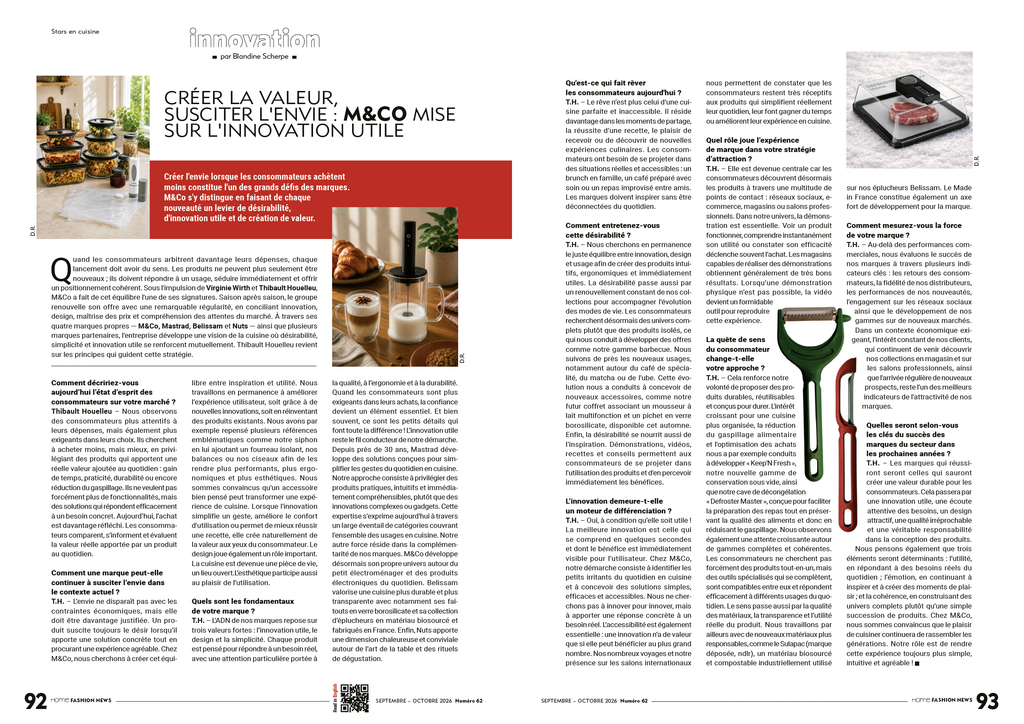
When consumers are more selective about their spending, every product launch needs to have a purpose. Products can no longer simply be new; they need to meet a genuine need, appeal immediately and offer coherent positioning. Under the leadership of Virginie Wirth and Thibault Houelleu, M&Co has made this balance one of its hallmarks. Season after season, the group renews its offering with remarkable consistency, combining innovation, design, price control and an understanding of market expectations. Through its four own brands — M&Co, Mastrad, Belissam and Nuts — as well as several partner brands, the company is developing a vision of the kitchen in which desirability, simplicity and useful innovation reinforce one another. Thibault Houelleu explains the principles guiding this strategy.
How would you describe consumers’ current mindset in your market?
Thibault Houelleu – We are seeing consumers who are more careful about their spending, but also more demanding in their choices. They want to buy less but better, favouring products that bring genuine added value to everyday life: saving time, practicality, durability or reducing waste. They do not necessarily want more features, but solutions that effectively address a specific need. Purchasing decisions are now more considered. Consumers compare products, seek information and assess the genuine value a product brings to their everyday lives.
How can a brand continue to inspire desire in the current environment?
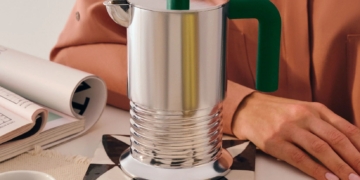
T.H. – Desire does not disappear because of economic constraints, but it needs to be better justified. A product can still inspire desire when it provides a practical solution while delivering an enjoyable experience. At M&Co, we seek to strike this balance between inspiration and usefulness. We are constantly working to improve the user experience, either through new innovations or by reinventing existing products. For example, we have redesigned several of our iconic products, such as our siphon by adding an insulating sleeve, as well as our scales and scissors, to make them more efficient, ergonomic and aesthetically pleasing.
We are convinced that a well-designed accessory can transform the cooking experience. When innovation simplifies a task, improves ease of use or helps achieve better results with a recipe, it naturally creates value in the eyes of consumers. Design also plays an important role. The kitchen has become a living space, an open area. Aesthetics also contribute to the pleasure of using a product.
What are the fundamentals of your brands?
T.H. – The DNA of our brands is based on three strong values: useful innovation, design and simplicity. Every product is designed to meet a genuine need, with particular attention paid to quality, ergonomics and durability. When consumers become more demanding in their purchasing decisions, trust becomes essential. And very often, it is the small details that make all the difference!
Useful innovation remains the guiding principle behind our approach. For nearly 30 years, Mastrad has been developing solutions designed to simplify everyday tasks in the kitchen. Our approach is to favour products that are practical, intuitive and immediately understandable rather than complex innovations or gadgets. Today, this expertise is expressed across a wide range of categories covering every aspect of kitchen use.
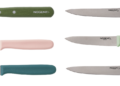
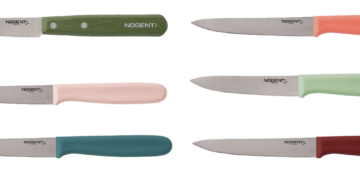
Another of our strengths lies in the complementary nature of our brands. M&Co is now developing its own universe around small domestic appliances and everyday electronic products. Belissam promotes a more sustainable and transparent approach to cooking, notably with its borosilicate glass casseroles and its collection of peelers made in France from bio-based material. Finally, Nuts brings a warm and convivial dimension centred on tableware and tasting rituals.
What inspires consumers today?
T.H. – The dream is no longer one of a perfect, unattainable kitchen. It is now more about moments of sharing, successfully preparing a recipe, the pleasure of entertaining or discovering new culinary experiences. Consumers need to be able to picture themselves in real, accessible situations: a family brunch, a carefully prepared coffee or an impromptu meal with friends. Brands need to inspire without losing touch with everyday life.
How do you maintain this desirability?
T.H. – We constantly seek the right balance between innovation, design and use in order to create products that are intuitive, ergonomic and immediately useful. Desirability also depends on constantly renewing our collections to keep pace with changing lifestyles. Consumers are now looking for complete universes rather than individual products, which is leading us to develop offerings such as our barbecue range.
We closely follow emerging uses, particularly around specialty coffee, matcha and ube. This evolution has led us to design new accessories, such as our forthcoming set combining a multifunction milk frother and a borosilicate glass jug, available this autumn.
Finally, desirability is also fuelled by inspiration. Demonstrations, videos, recipes and advice enable consumers to picture themselves using the products and immediately understand their benefits.
Does innovation remain a driver of differentiation?
T.H. – Yes, provided it is useful! The best innovation is one that can be understood within seconds and whose benefit is immediately apparent to the user. At M&Co, our approach is to identify the small everyday frustrations people encounter in the kitchen and devise simple, effective and accessible solutions.
We do not seek to innovate for innovation’s sake, but to provide a practical response to a genuine need. Accessibility is also essential: an innovation only has value if it can benefit as many people as possible. Our many trips and our presence at international trade shows enable us to see that consumers remain highly receptive to products that genuinely simplify their everyday lives, save them time or improve their cooking experience.
What role does the brand experience play in your strategy for attracting consumers?
T.H. – It has become central because consumers now discover products through a multitude of touchpoints: social media, e-commerce, stores and trade shows. In our sector, demonstrations are essential. Seeing a product in action, immediately understanding its usefulness or witnessing its effectiveness often triggers a purchase. Stores that are able to offer demonstrations generally achieve very good results. When a physical demonstration is not possible, video becomes a powerful tool for recreating that experience.
Has consumers’ search for meaning changed your approach?
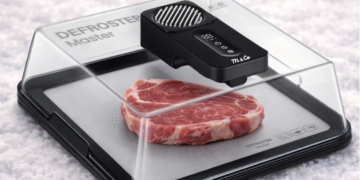
T.H. – It reinforces our determination to offer sustainable, reusable products designed to last. The growing interest in a more organised approach to cooking, reducing food waste and optimising purchases has, for example, led us to develop Keep’N Fresh, our new vacuum food-storage range, as well as our Defroster Master defrosting chamber, designed to make meal preparation easier while preserving food quality and therefore reducing waste.
We are also seeing growing demand for complete, coherent ranges. Consumers are not necessarily looking for all-in-one products, but for specialised tools that complement one another, are compatible with one another and effectively meet different everyday needs. Meaning also comes from the quality of the materials, transparency and the product’s genuine usefulness.
We are also working with new, more responsible materials such as Sulapac (registered trademark, Editor’s note), a bio-based, industrially compostable material used for our Belissam peelers. Made in France is also a major area of development for the brand.
How do you measure the strength of your brands?
T.H. – Beyond commercial performance, we assess the success of our brands using several key indicators: consumer feedback, retailer loyalty, the performance of our new products, engagement on social media and the development of our ranges in new markets. In a challenging economic environment, the continued interest of our customers, who keep coming to discover our collections in stores and at trade shows, together with the regular arrival of new prospects, remains one of the best indicators of the attractiveness of our brands.
What do you think will be the keys to success for brands in the sector in the coming years?
T.H. – The brands that succeed will be those that know how to create lasting value for consumers. This will require useful innovation, careful attention to their needs, attractive design, impeccable quality and genuine responsibility in product design.
We also believe that three elements will be decisive: usefulness, by addressing genuine everyday needs; emotion, by continuing to inspire and create moments of pleasure; and consistency, by building complete universes rather than simply launching one product after another.
At M&Co, we are convinced that the pleasure of cooking will continue to bring generations together. Our role is to make that experience ever simpler, more intuitive and more enjoyable!
Cette version conserve toutes les informations du français, y compris les quatre marques, les exemples de produits, Keep’N Fresh, Defroster Master, Sulapac et les trois notions finales usefulness / emotion / consistency. Je n’ai pas ajouté d’informations qui ne figurent pas dans l’original.
Source: Home Fashion News #62 – Sept 2026 / Translation: Leila Ahmad